The Hidden Infrastructure Behind Online Community Expansion

More than 200 million people use Discord every month, and the platform has evolved far beyond gaming communities. Brands, creators, educators, and political groups now rely on online servers to build audiences and maintain engagement. As communities compete for attention, a parallel industry has emerged around audience growth, automated participation, and digital visibility. Researchers at Stanford University and MIT Technology Review have both noted that artificial engagement systems are becoming increasingly difficult to distinguish from genuine online interaction.
One visible part of that ecosystem involves services that promise faster server growth, stronger engagement metrics, or increased visibility. Platforms offering DiscordBooster services often position themselves as marketing tools for online communities. Behind the promotional language, however, sits a complex technical infrastructure involving automation frameworks, account management systems, behavioral simulation, and moderation balancing. These systems reflect broader changes in how online communication is shaped, measured, and sometimes manipulated.
Automation as the Foundation of Community Growth
Most large-scale community expansion tools depend heavily on automation. Manual onboarding of thousands of users would be expensive and difficult to scale. Instead, operators build systems that automate account creation, invitation tracking, activity scheduling, and engagement timing.
Data from Cloudflare shows that automated internet traffic now represents a significant share of total web activity. Some of that traffic supports useful functions like search indexing or cybersecurity scanning. Yet automation also powers large engagement networks across social platforms. In the case of Discord-focused growth systems, automation can handle repetitive tasks such as joining servers, assigning reactions, sending scheduled messages, or simulating participation patterns.
Technical experts often compare these systems to customer relationship management platforms used in digital marketing. The difference lies in the environment. Community servers rely on social trust and interpersonal interaction, which makes automated participation harder to detect when executed carefully.
Developers behind these services frequently use distributed cloud hosting to avoid activity spikes from appearing centralized. Multiple IP addresses, rotating device fingerprints, and staggered login behavior help systems imitate organic user activity. Cybersecurity analysts at Kaspersky have observed similar behavioral masking techniques in broader bot network operations across social media.
The Rise of Engagement Simulation
Community growth today depends heavily on perceived activity. New users entering a quiet server are less likely to remain active. As a result, many server owners seek ways to create momentum during the early stages of growth.
This demand has encouraged the development of engagement simulation systems. These systems can produce reactions, timed chat activity, voice channel presence, or participation bursts designed to make servers appear active. Some rely on real users completing incentive-based tasks, while others use AI-assisted conversational behavior.
Research from The Alan Turing Institute suggests that AI-generated online interactions are becoming increasingly conversational and context-aware. Modern language models can maintain short discussions, respond to prompts naturally, and adapt to server culture. Although many platforms prohibit deceptive automation, enforcement remains difficult because conversational AI continues improving rapidly.
The technical challenge is less about generating messages and more about sustaining believable behavior over time. Human communities contain randomness. Conversations pause unexpectedly. Users make typing mistakes. Activity rises and falls naturally depending on time zones and cultural events. To mimic authenticity, advanced engagement systems increasingly introduce variability into interaction timing and communication style.
These developments raise concerns about the future of trust online. If participation metrics become easy to manufacture, administrators and users may struggle to determine whether communities reflect genuine enthusiasm or algorithmic amplification.
Infrastructure Scaling and Performance Pressure
Large online communities create serious infrastructure demands. As servers expand, moderation workloads increase, message throughput grows, and storage systems face greater pressure. Even legitimate community growth can expose technical weaknesses.
Discord itself relies on extensive backend infrastructure to manage voice communication, real-time messaging, and low-latency synchronization. Engineers from the company have publicly discussed their use of technologies such as Elixir, Rust, and distributed databases to support millions of simultaneous users. Community expansion services operating around the platform must adapt to those same scaling realities.
Growth providers often use centralized dashboards that monitor invite performance, retention patterns, and engagement trends across multiple servers. These dashboards resemble analytics suites used in mainstream social media marketing. Operators can measure join rates, track participation windows, and identify periods where activity appears unnatural.
At the same time, platform detection systems have become more advanced. Discord regularly removes coordinated spam networks and malicious automation systems. Security researchers at Imperva report that platforms increasingly analyze behavioral signals rather than relying only on account counts or IP addresses. Timing consistency, interaction repetition, and navigation patterns can all reveal automation.
This creates an ongoing technical arms race. Community expansion systems evolve to appear more human, while platform governance tools evolve to identify synthetic behavior more effectively.
The Moderation Burden Behind Rapid Growth
Rapid audience expansion often creates moderation challenges long before communities establish healthy governance structures. Moderators may suddenly face spam, harassment, impersonation attempts, or coordinated raids.
Studies published by the Pew Research Center show that online moderation remains one of the most difficult aspects of digital community management. Large communities require constant oversight, clear behavioral policies, and effective escalation systems. When membership grows faster than moderation capacity, trust within the community can weaken quickly.
Some server growth systems attempt to reduce this friction through automated moderation tools. AI-assisted moderation can flag abusive language, detect suspicious joining patterns, or isolate accounts exhibiting bot-like behavior. Yet automation introduces its own risks. False positives can punish legitimate users, while determined bad actors continuously adapt to moderation rules.
Experts at the Electronic Frontier Foundation have warned that aggressive automated moderation may also create transparency concerns. Users rarely understand how decisions are made or why certain behaviors trigger restrictions. This lack of visibility can undermine confidence in online governance systems.
Despite these concerns, automated moderation is becoming unavoidable as communities expand globally. Human moderators alone cannot realistically monitor large, fast-moving communication networks twenty-four hours a day.
AI, Authenticity, and the Future of Online Communities
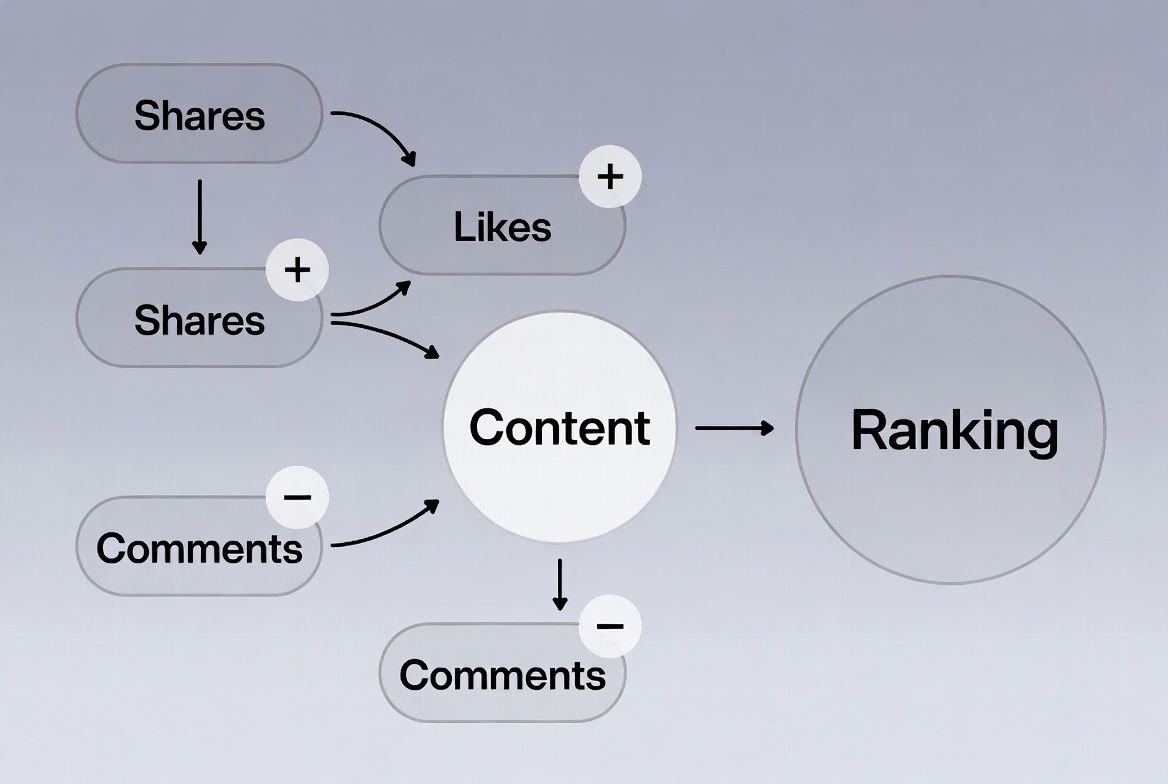
The debate surrounding digital engagement services reflects a much larger shift across the internet. Social platforms increasingly depend on algorithms to shape visibility, prioritize interaction, and recommend communities. Artificial intelligence now influences what people see, who they interact with, and which conversations gain momentum. For a deeper exploration of how these signals influence online behavior, see the algorithm game, which examines how engagement signals shape what we see online.
As AI-generated participation tools become more sophisticated, the line between authentic engagement and engineered visibility may continue to blur. Some analysts argue that these systems simply automate marketing functions that businesses have used for years. Others believe they risk damaging the social trust that online communities depend on.
Researchers from Oxford Internet Institute have argued that authenticity online will become less about proving whether every interaction is human and more about building transparent governance systems users can trust. Platforms may eventually require stronger identity verification, behavioral disclosure standards, or clearer labeling for automated participation.
Meanwhile, the market for community acceleration tools continues to grow. Audience expansion platforms, engagement boosters, and server promotion networks reflect the increasing pressure placed on creators and brands to maintain visibility in crowded digital spaces.
The hidden infrastructure behind these systems reveals a deeper reality about modern online communication. Growth is no longer driven purely by word of mouth or organic discovery. It is shaped by automation, analytics, algorithmic visibility, and increasingly sophisticated behavioral engineering. Whether that evolution strengthens communities or weakens public trust will depend on how platforms, developers, and users respond in the years ahead.